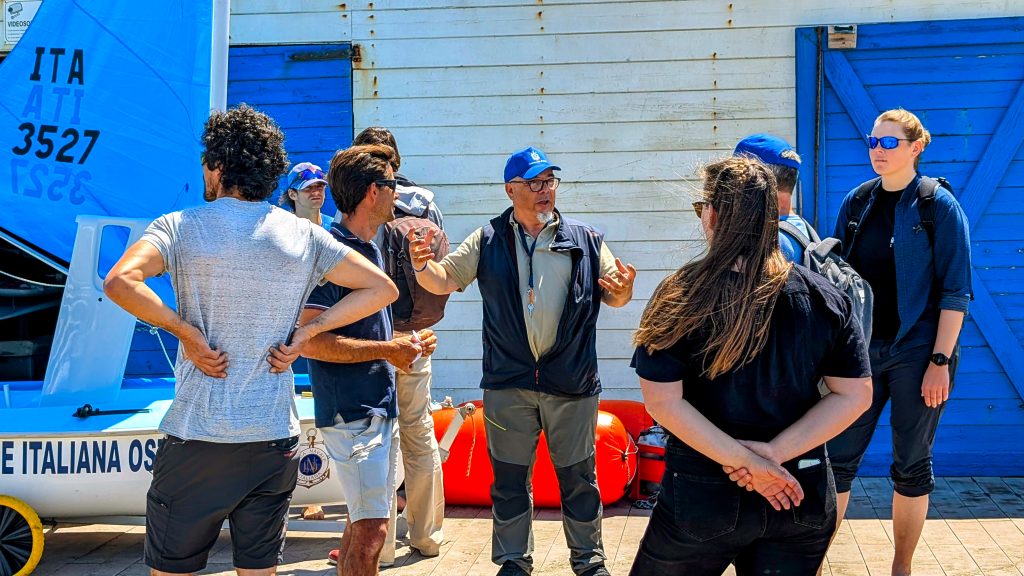
An inclusive sailing club is not defined by one adapted boat, one accessible event, or one programme organised once a year.
Real inclusion becomes part of everyday club life.
It can be seen in how newcomers are welcomed, how instructors communicate, how facilities are designed, how activities are organised, how information is shared, and whether people with different backgrounds and abilities feel that they genuinely belong.
One of the most important principles is to think about inclusion from the beginning rather than waiting until someone asks for an adaptation.
A club planning a new programme can ask: Who might have difficulty participating? Is the information understandable to someone who has never sailed before? Can people reach the sailing centre? Are facilities accessible? Is equipment available? Are there affordable ways to participate? Are instructors prepared to work with people who learn or communicate differently?
Thinking about these questions in advance can prevent barriers from appearing later.
Accessibility starts with the physical environment. Safe and stable pontoons, non-slip surfaces, clear pathways, accessible toilets and changing facilities, ramps, handrails, and appropriate boarding equipment can make a major difference.
Boats and equipment should also be considered. Stable boats, supportive seating, adapted steering, grab handles, tactile or colour-coded ropes, and other modifications can enable more people to take an active role on board.
However, equipment alone cannot create inclusion.
People create the culture of a sailing club.
A newcomer should be able to enter the clubhouse without feeling that everyone else belongs there except them. Staff, coaches, volunteers, members, and experienced sailors all contribute to this first impression.
Using welcoming language, explaining how the club works, avoiding unnecessary jargon, introducing people to other members, and offering clear information about how to begin can make sailing feel much more accessible.
Representation also matters. When people see sailors, coaches, volunteers, and leaders from different backgrounds, ages, genders, and abilities, it becomes easier to imagine themselves as part of the sailing community.
Financial accessibility should also be considered. Not everyone can own a boat or purchase specialist sailing equipment. Shared boats, club equipment, affordable introductory programmes, reduced fees, partnerships, and community-based programmes can help make sailing available to a wider range of participants.
Flexible participation is equally important. Not everyone wants to race. Some people want recreation, social interaction, education, confidence, rehabilitation, or simply the experience of being on the water.
An inclusive club recognises these different motivations and provides more than one pathway into sailing.
Safety remains essential. Inclusion does not mean ignoring risk. Instead, risks should be assessed individually and managed appropriately. Participants should be involved in conversations about their needs rather than decisions automatically being made for them.
Creating opportunities for feedback is another important step. Clubs can regularly ask participants, families, instructors, and volunteers what is working and what could be improved. Inclusion is not something an organisation completes. It develops as people, programmes, and circumstances change.
Perhaps most importantly, an inclusive sailing club sees diversity as an advantage rather than a problem to solve.
Different people bring different experiences, strengths, perspectives, and ways of thinking. On a sailing boat, those differences can become part of the crew’s strength.
Everyone may have a different role, but everyone contributes to moving the same boat forward.
That idea can extend from the boat to the entire sailing community.
Inclusive sailing is not about creating a separate place for people who are different. It is about creating one sailing community in which difference is expected, respected, and welcomed.