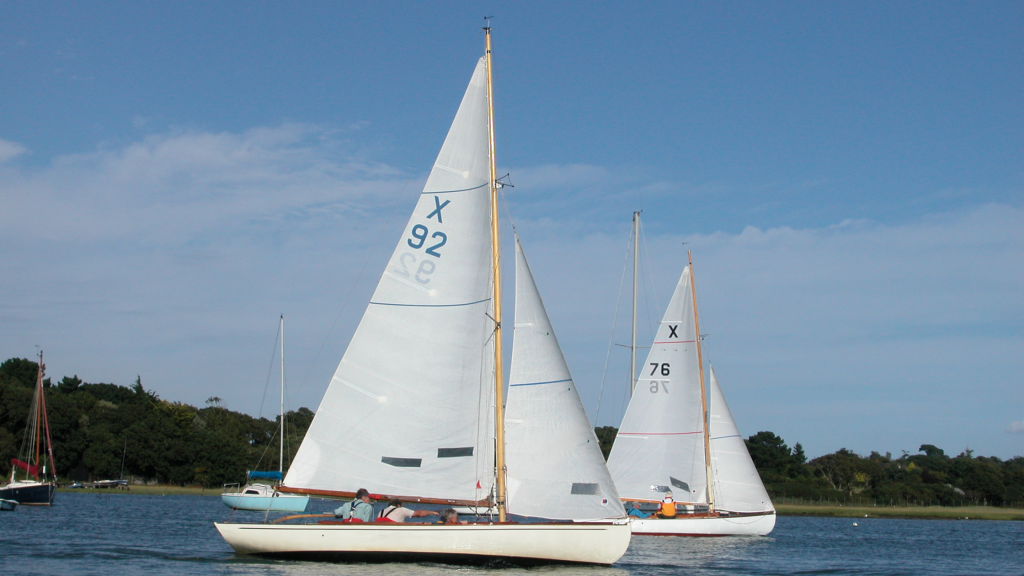
Raising the Genoa or jib, is usually carried out after the sailboat is already sailing safely with the mainsail hoisted and properly trimmed. Once the helmsman has the boat fully under control and the course is stable, the crew can proceed with hoisting or unfurling the genoa. Compared to hoisting the mainsail, this procedure is generally simpler, but it still requires precision and good coordination among the crew.
There are also two methods of attachment for the genoa. The traditional system, with a luff track on the forestay and a halyard, is nowadays mainly used on racing sailboats, while most cruising sailboats are equipped with a furling system that allows easy unfurling and furling of the sail. With the traditional system, before hoisting, the crew must make sure that the sail is correctly attached to the halyard, that both sheets are properly tied on, and that the tack of the sail is securely fastened to the deck.
With a furling jib, the procedure is even slightly simpler. First, the windward sheet is released, then the stopper holding the furling line is opened. The headsail is unfurled using the leeward sheet, and it is highly recommended that one crew member simultaneously eases the furling line slightly. This ensures that the line is wound evenly and neatly onto the drum. If this is not done, the line may wind incorrectly or even form knots, which can later cause serious problems when furling the sail again. Once the jibis fully unfurled, it is trimmed with the sheet to the correct setting.
After hoisting or unfurling the jib, it is extremely important to check the position of the jib sheet lead (car), as it has a decisive influence on the shape of the sail. If the car is set too far forward, the leech will be too tight and the foot too loose. If the car is set too far aft, the foot will be too tight and the leech too loose. Correct adjustment of the car ensures even tension across the entire sail and an optimal shape. Once the jib is precisely trimmed, a small correction of the mainsail trim usually follows, as it often needs to be sheeted in slightly more. The reason for this is the increased airflow through the slot between the jib and the mainsail and the change in apparent wind, since the sailboat reaches a higher speed with both sails set.