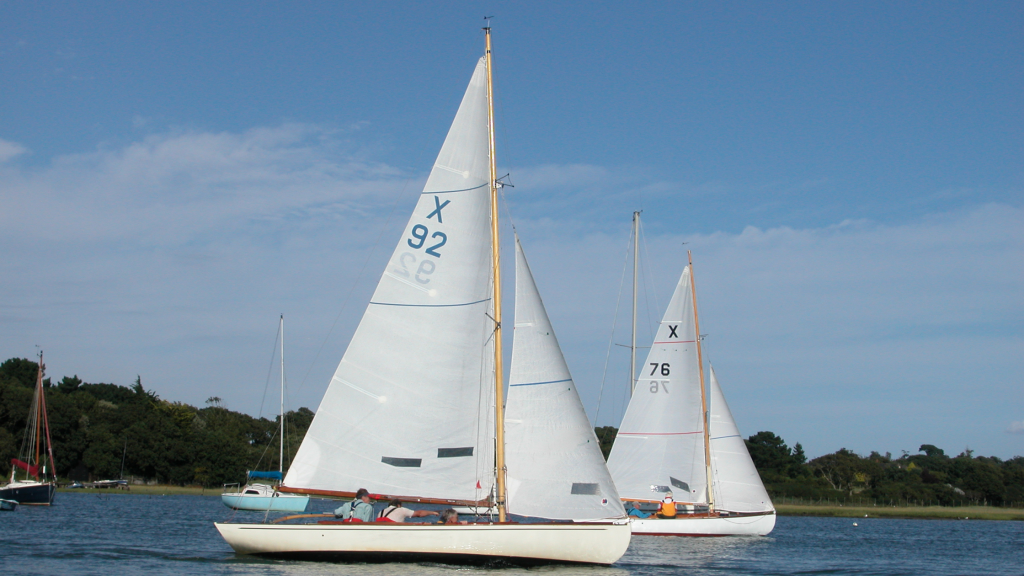
Sailing upwind is one of the most important skills in sailing. At first, it may seem unusual that a sailboat can move toward the direction the wind is coming from, but once we understand the relationship between the wind, the sails, and the course of the boat, the principle becomes quite simple.
The first thing we need to know is where the wind is coming from. This is the starting point for almost every decision we make while sailing. When our destination lies in the direction of the wind, we cannot simply point the boat directly toward it. A sailboat cannot sail straight into the wind because the sails need airflow across them in order to generate power. If we point directly into the wind, the sails begin to luff and the boat loses speed.
Instead, we sail at an angle to the wind. For beginners, around 45 degrees from the wind is a useful reference when learning how to sail upwind. The exact angle will depend on the type of boat, the conditions, and the sail trim, but the basic idea is always the same: we sail close enough to the wind to make progress toward our destination, while keeping enough airflow over the sails to maintain speed and control.
Once the boat is at a suitable angle, we sheet in the sails and allow them to fill. As the airflow over the sails becomes effective, the boat accelerates. If we want to slow down or stop, we can turn the bow toward the wind and ease the sails. When the boat faces directly into the wind, the sails lose their driving force and begin to flutter.
Because we cannot sail directly into the wind, reaching an upwind destination usually means sailing in a zigzag pattern. We sail on one side of the wind for a while, then change direction and continue on the other side. This change of direction is called a tack.
During a tack, the bow of the boat passes through the wind and the sails move from one side of the boat to the other. If we imagine that we are sailing approximately 45 degrees from the wind on one side, we turn toward the wind, pass through it, and continue turning until we are roughly 45 degrees from the wind on the other side. In this simplified example, the total change of course is about 90 degrees.
On a dinghy with a tiller and tiller extension, the tack begins by steering the boat toward the wind. As the boat turns, the sails cross to the opposite side. Once they fill again and the boat is established on the new course, the helm is brought back toward the center. Smooth steering is important because unnecessary rudder movement creates drag and slows the boat down.
One of the most useful tools for improving upwind sailing is the telltale. Telltales are small pieces of lightweight material attached to the jib, usually on both sides of the sail. They show us how the air is flowing across the sail and help us judge whether we are sailing at the correct angle to the wind.
When both telltales stream smoothly backward and roughly parallel to each other, the airflow over the sail is good. This means the boat is sailing efficiently, with good speed and control. When the telltales begin to behave differently, they give us a warning that the course may need adjusting.
If the windward telltale starts to rise, fall, twist, or move irregularly, and the front of the sail begins to luff slightly, the boat is usually sailing too close to the wind. The correction is to bear away slightly, meaning we turn the boat a little farther away from the wind. This allows the sail to fill properly again.
If the leeward telltale is the one moving irregularly, the boat is generally sailing too far away from the wind. In that case, we can head up slightly, turning the boat closer toward the wind. This helps us make better progress toward our destination without losing efficient airflow over the sail.
Good upwind sailing is therefore not about holding one fixed angle. The wind is constantly changing, so the sailor needs to keep observing the telltales, the sails, and the movement of the boat. Small steering corrections are usually enough. Over time, this becomes more intuitive, and the sailor begins to feel when the boat is sailing efficiently even before checking the telltales.
Strong gusts also require attention. When a gust hits the sails, the sudden increase in power can cause the boat to heel too much. If this happens, one simple way to stabilize the boat is to maintain the upwind course while easing the mainsheet slightly. This releases some of the pressure from the mainsail and reduces the force pushing the boat over. Once the gust passes and the boat is stable again, the mainsail can be trimmed back in.
Upwind sailing is a very good exercise for developing awareness of the wind. Because we are sailing toward the incoming wind, the airflow can feel stronger and easier to detect. This helps us learn to recognize changes in wind direction and strength, which is one of the most important skills in sailing.
The key is to remember that upwind sailing is a constant balance between direction and speed. We want to sail as close to the wind as possible, but not so close that the sails lose power. By watching the telltales, making small corrections, and practicing smooth tacks, we can sail efficiently toward an upwind destination.
With practice, upwind sailing becomes one of the most enjoyable and rewarding parts of sailing.