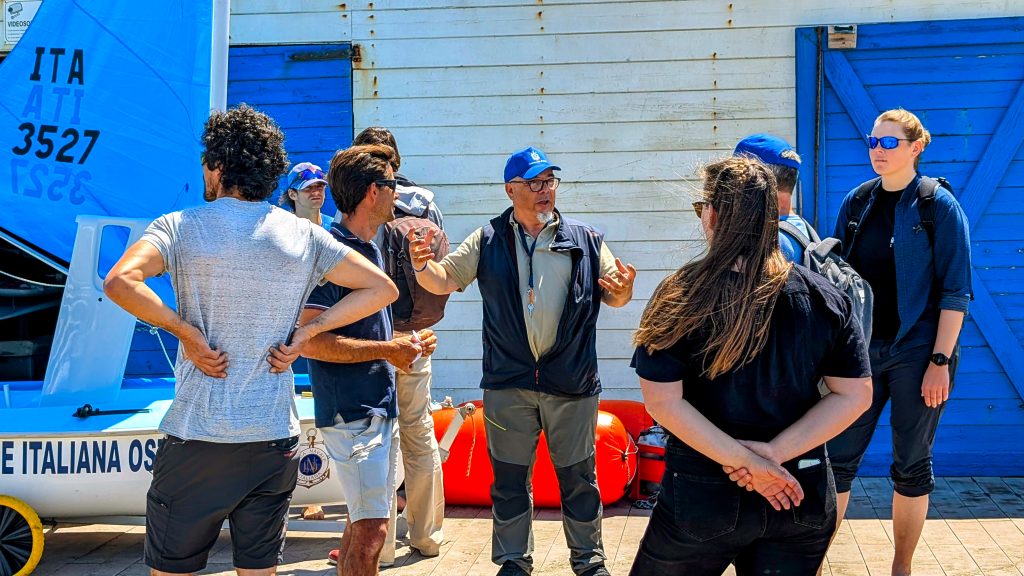
Sailing offers much more than learning how to control a boat. It develops teamwork, communication, responsibility, confidence, problem-solving skills, and a close connection with nature. It can be recreational or competitive, calm or challenging, individual or social. Most importantly, sailing can be enjoyed throughout different stages of life.
But these opportunities only matter if people are able to access them. Inclusive sport is based on a simple idea: everyone should have a meaningful opportunity to participate, regardless of their abilities, age, gender, background, financial situation, previous experience, or other personal circumstances.
Inclusion does not mean that everyone needs exactly the same support or has to participate in exactly the same way. Some sailors may need adapted equipment. Others may need more time to learn a manoeuvre, clearer instructions, financial support, an accessible pontoon, or simply encouragement and a welcoming environment. The aim is not to make everyone fit into one existing system. Instead, the sailing environment should be flexible enough to respond to different people and their needs.
This is particularly important in sailing because the sport can sometimes appear difficult to enter. Boats and equipment can be expensive, sailing clubs may be far from where people live, technical language can be intimidating for beginners, and some facilities or boats may not be accessible to people with disabilities. There can also be less visible barriers. Someone who has never sailed before may feel that everyone else already knows what to do. A young person from a family without a sailing background may not see sailing as a sport for them. Someone with a disability may assume that getting onto a boat is impossible. Cost may prevent another person from even considering sailing lessons.
An inclusive sailing community actively works to identify and reduce these barriers. Sailing is particularly well suited to this approach because every crew is already based on cooperation. People on a boat have different roles and responsibilities. One person may steer while another controls a sail, watches the wind, helps with manoeuvres, or supports another member of the crew. Successful sailing does not depend on everyone having identical abilities. It depends on people using their different strengths to work towards the same goal.
This makes mixed crews especially valuable. People of different ages, abilities, experiences, and backgrounds can learn from each other while sharing responsibility for the boat. Creating this environment requires more than adapted boats or specialist equipment. It starts with attitudes. Sailing clubs, instructors, volunteers, and experienced sailors all influence whether a newcomer feels welcome. Simple things matter: explaining unfamiliar terminology, giving people enough time to learn, asking what support they need instead of making assumptions, respecting different abilities, and recognising progress.
Inclusion also means creating an environment where people feel safe and respected. Discrimination, harassment, bullying, and exclusion have no place in sport. Everyone should be able to participate with dignity and confidence. For sailing clubs, becoming more inclusive can also strengthen the entire organisation. Opening sailing to a wider community brings new participants, new volunteers, different experiences, and new perspectives.
For participants, the impact can extend far beyond learning how to sail. Sport can help build confidence, independence, friendships, resilience, and a sense of belonging. The first step towards inclusive sailing is therefore not asking whether someone can adapt to sailing.
It is asking how sailing can adapt so that more people can experience it.
Because the sea does not belong to one type of sailor.
Sailing should be a place where everyone has the opportunity to learn, participate, contribute, and belong.