
Appropriate clothing is an important part of safety at sea, although it is often underestimated by crews. At sea, we are exposed to wind, moisture, sun, and rapidly changing weather conditions, so clothing serves not only for comfort but also for protection against hypothermia, overheating, and injuries. In adverse conditions, inadequate clothing can quickly become a safety risk.
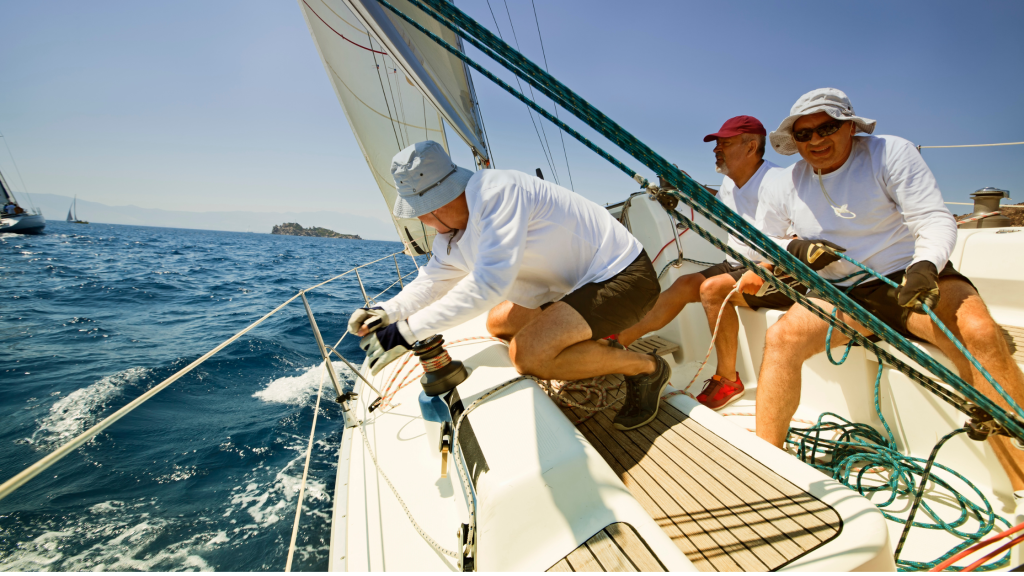

The basic rule for dressing when sailing is layering. Instead of wearing one thick garment, several thinner layers are used, which can be added or removed as needed. The first layer should provide moisture management, drawing sweat away from the body. This includes functional garments made of synthetic materials or wool, which remain warm even when damp. Cotton is not suitable, as it absorbs moisture quickly and accelerates heat loss.
The second layer is intended for thermal insulation. These are fleeces, sweaters, or lightweight jackets that retain body heat and protect against wind. In colder conditions, this layer is essential for preventing hypothermia, which can occur at sea even at moderate temperatures due to wind and moisture.
The outer layer must provide protection against wind and water. A waterproof and windproof jacket and trousers are essential equipment, especially when sailing. It is important that these garments are breathable, as this prevents moisture buildup on the inside. Specialized sailing clothing often features reinforced seams and a cut designed to allow free movement on deck.
Footwear also plays a crucial role in safety. Shoes should have non-slip soles, fit securely, and protect the toes. On a sailboat, closed sailing shoes or lightweight boots are most suitable, as walking barefoot or wearing sandals increases the risk of slipping and injury. In colder weather or during longer passages, waterproof boots are recommended.
Protection from the sun is necessary even in cloudy conditions. A cap or hat protects the head from sunstroke and reduces heat loss in colder weather. Sunglasses with UV protection prevent glare from the sea surface and protect the eyes. Long sleeves and trousers made of lightweight materials are often a better choice than short clothing, as they provide additional protection from the sun and wind.
Finally, accessories such as sailing gloves should not be overlooked, as they protect the hands from abrasions and improve grip on ropes, as well as spare dry clothing stored in a waterproof bag. In case of getting wet or encountering bad weather, dry clothes are essential for maintaining body warmth and crew comfort.
Check out the video, how the sailors prepare for condition in Estonia!
