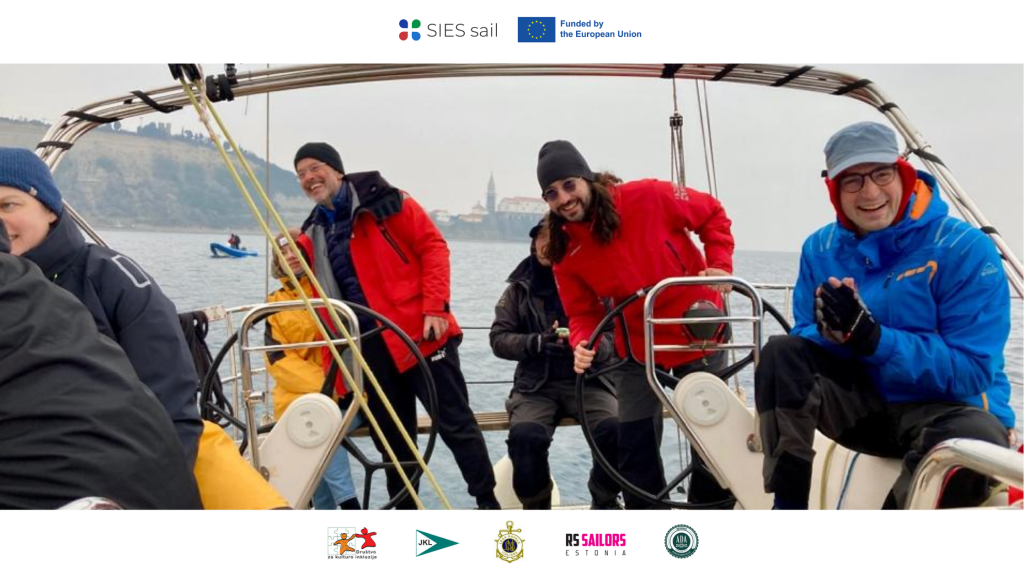
Between February 20 and 24, 2025, the first international meeting of the SIESsail project took place in Piran, hosted by the Sailing Club Ljubljana. The event marked an important milestone, both the official start of the collaboration and the first opportunity for partners to meet in person, exchange experiences, and begin shaping a shared vision for the development of sailing in Europe.
The SIESsail project brings together sailing clubs and organizations from Slovenia, Italy, Estonia, and Serbia. Its main goal is to develop sailing as an inclusive, accessible, and sustainable sport, suitable for everyone, regardless of age, prior experience, or personal circumstances.
Focus on inclusion, accessibility, and sustainability
The program began with a project meeting where partners reviewed planned activities, work packages, and the project timeline. A key topic was how to make sailing more accessible to a wider audience and more inclusive overall. As part of this, the Association for Inclusive Culture led a workshop on the importance of accessible and inclusive sport. Participants discussed practical ways to involve people with different abilities in sailing activities and how to create an environment where everyone feels welcome. Environmental responsibility was also an important part of the program. A lecture on protecting the sea from plastic waste sparked discussion about microplastics, human impact on marine ecosystems, and the role sailing clubs can play in raising awareness. Participants shared experiences from different environments and emphasized that sport can play a significant role in changing attitudes toward nature.
Learning through practice
As part of the meeting, participants visited the Maritime Museum in Piran, where they explored the region’s rich maritime heritage. This cultural aspect further highlighted the importance of sustainability in sailing – a sport that has been closely connected to nature for centuries. A key part of the meeting focused on practical, on-the-water activities. Partners took part in demonstrations and sailing courses for both adults and children. This allowed them to learn different teaching approaches, methods, and ways to motivate participants while making sailing safe and engaging. These practical activities also served as a foundation for developing educational video content that will be made available to the wider public as part of the project. In this way, the knowledge gained during the meeting will contribute to the long-term development of sailing education across Europe.
We’ll report back from the next meeting in Rome!